Advancing Computational Neurobiology
Technically-advanced solutions with real-world applications that range from CNS drug discovery to precision medicine
.avif)
Mechanistic Multiscale Computational Neuroscience
Summary
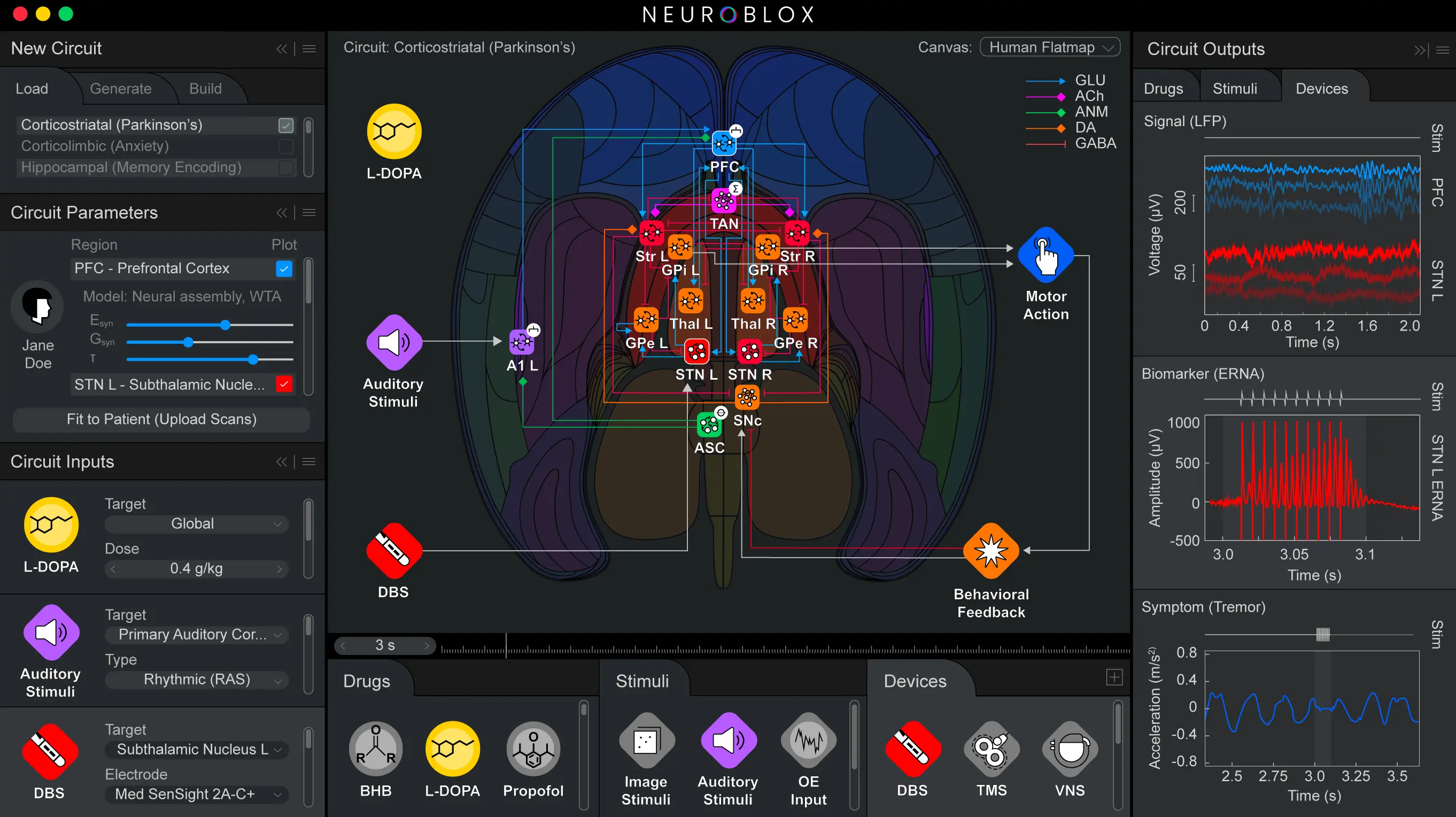
One powerful application of multi-scale modeling is the ability to identify mechanistic changes at the cellular scale that give rise to emergent network, circuit, and behavioral effects at the clinical scale. To facilitate the development and testing of these complex models, we developed Neuroblox, a neuroCAD platform designed to accelerate biotech innovation and precision therapeutics for neuropsychiatric disorders and cognitive performance.
Neuroblox permits users to load prebuilt (experimentally validated) neural circuits that can be modified. Likewise, users can upload their own experimental data to model neural circuits from modular components. In both cases, Neuroblox allows users to simulate treatment effects across spatio-temporal scales and predict outcomes: from molecular targets to biomarkers to psychiatric/cognitive symptoms. Neuroblox uses libraries of modular neurobiological building blocks ("blox") that snap together like components in a circuit diagram.
Circuits include the corticostriatal, corticothalamic, and prefrontal-limbic. Modules are plug-ins for those circuits optimized for specific applications: e.g., Pharma, Metabolic, Deep Brain Stimulation.
For Neuroblox biotech partnerships, please contact our commercial arm: www.neuroblox.ai
Related Publications


Awards
New York State Research Evaluation and Commercialization Hub
Development of a Deep Brain Stimulation Toolbox in Neuroblox

Baszucki Foundation
Use of Ketosis in Modulating Metabolic Pathways in Bipolar Disorder
Baszucki Foundation
Neuroblox: a Data-Driven Platform for Computational Psychiatry (Phases 0 & 1)
Neurometabolism and Brain Aging
Summary
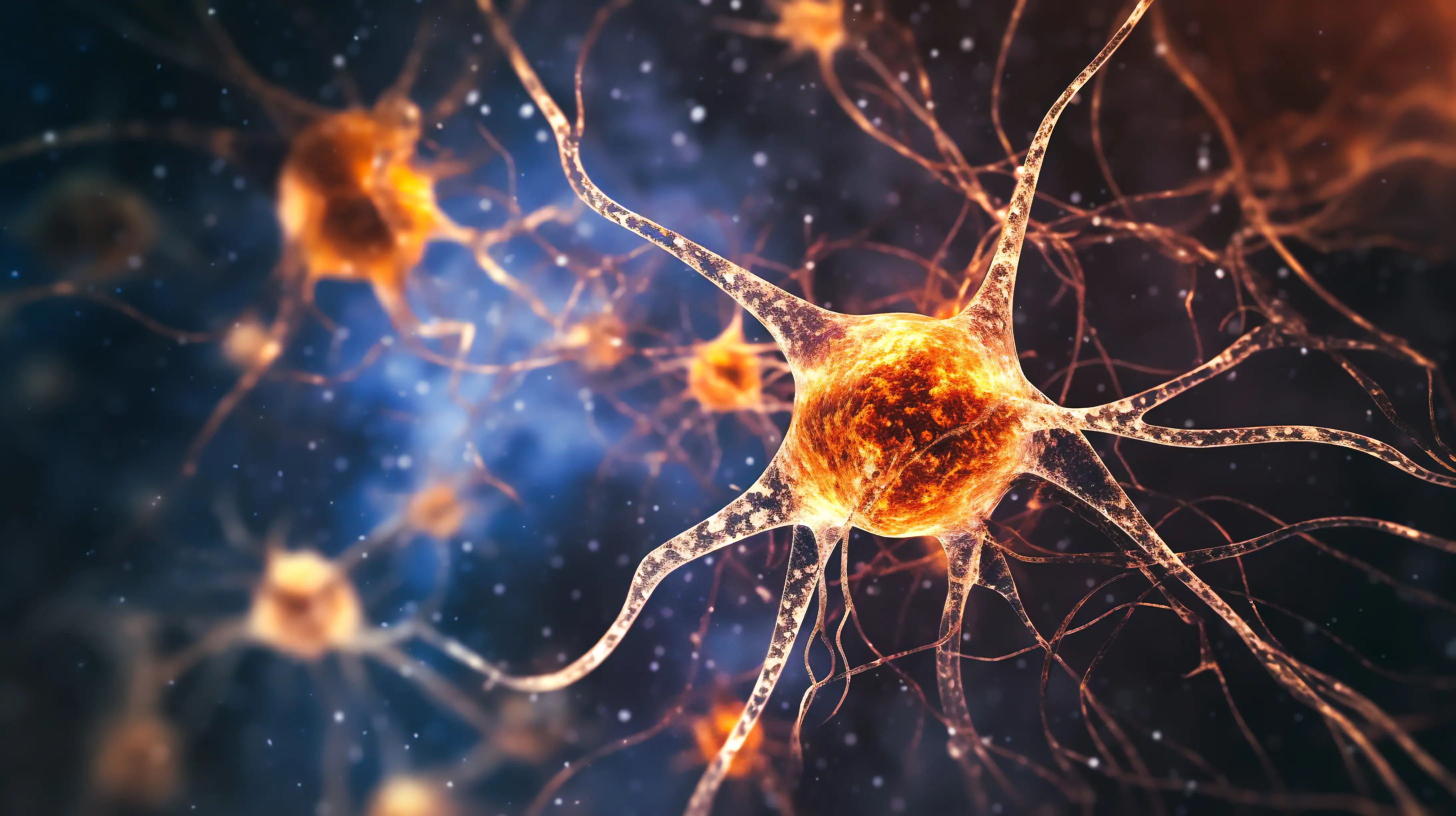
One significant area of focus by our team has been neurometabolism and its predictive and preventative impact on the clinical trajectory of brain aging. In particular, we have worked at all scales to systematically develop a mechanistic understanding of how metabolic interventions can restore age-related disruptions in brain network function.
Our research demonstrates that ketosis—achieved through ketone administration—strengthens brain-wide signaling by modulating key neurobiological processes: regulating K+ ion channels that are disrupted by aging, optimizing glutamate/GABA signaling, and elevating antioxidants alongside energy metabolism markers.
Related Publications
Awards
NIA/NIH R21 AG074706
Using Artificial Intelligence to Identify Accelerated Brain Aging in World Trade Center Responders
NSF BRAIN Initiative (1926781)
NCS-FR: Protecting the Aging Brain: Self-Organizing Networks and Multi-Scale Dynamics under Energy Constraints
W.M. Keck Foundation
Protecting the Aging Brain: Self-Organizing Networks and Multi-Scale Dynamics under Energy Constraints
NSF ECCS1533257 BRAIN Initiative
NCS-FO: Individual Variability in Human Brain Connectivity, Modeled Using Multi-Scale Dynamics Under Energy Constraints
National Academies Keck Futures Initiative
Multi-Scale Modeling: Metabolic Constraints on Self-Organizing Brain Networks
Circuit Biomarkers for Precision Medicine
Summary
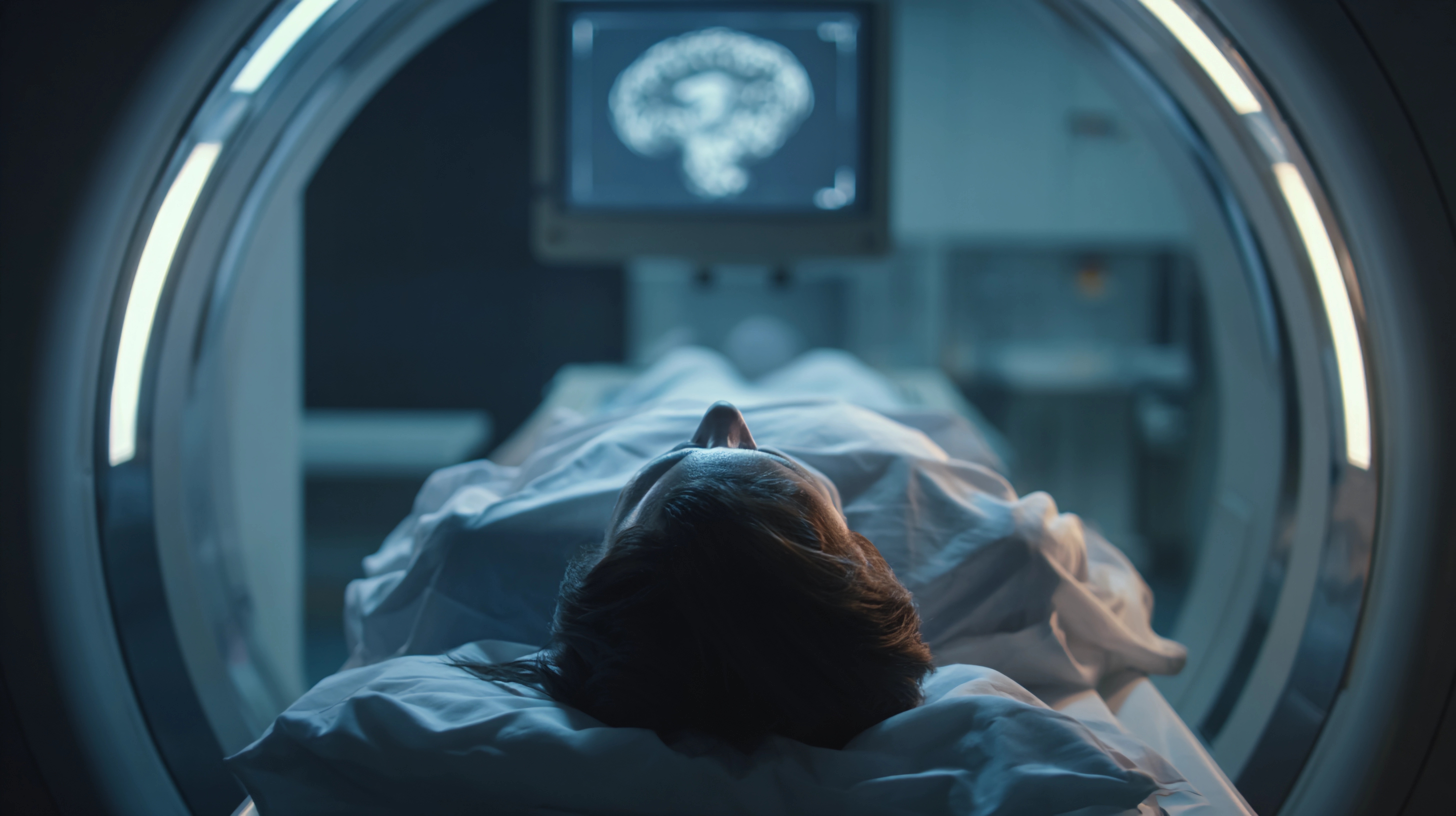
Our team has pioneered methods to identify and quantify control circuit regulation of intact feedback loops from human neuroimaging data. This matters because distinct types of neurotransmitter-based dysregulation for key circuits (prefrontal-limbic for threat, corticostriatal for learning and reward, ventral stream and thalamocortical loop for sensory integration) are thought to underlie most disorders of cognition, mood, and behavior.
However, “dysregulation” cannot be characterized by standard neuroimaging analyses focused solely on activation maps and/or connectivity. Our contributions include adapting techniques from complex systems analysis and control systems engineering to neuroimaging time series, and quantifying circuit-based regulatory parameters such as feedback strength, sensitivity to perturbation, and control error.
Related Publications
Awards
DARPA ARO W911NF0910462
Ambiguity-Priming Facilitates Pattern Detection and Resistance to Set-Shifting
NARSAD Young Investigator Award
Cognitive Processing and Stress in Schizophrenia
Frontier Fund
Cognitive Processing and Stress in Schizophrenia
ONR N000141210393
Computational Modeling of Oxytocin in the Regulation of Trust
ONR N0024406P1105
Genetic Polymorphisms, the Stress Response, and their Interaction with the Immune System
Enhancing Signal/Noise for N=1 Neuroimaging
Summary
A complementary body of work establishes critical methodological foundations for translating neuroimaging research into reliable clinical neurodiagnostic tools. This work addresses challenges in extracting robust individual-specific parameters from noisy neural data.
Our research provides solutions to measurement noise contamination through data-driven correction methods for scanner-induced distortions in fMRI time series and principled parameter estimation techniques for stochastic neural processes. A key contribution is the development of computationally efficient modeling frameworks that significantly increase the speed and flexibility of dynamic causal modeling—essential for clinical applications requiring real-time parameter estimation.
The integration of novel behavioral paradigms with advanced computational methods enables functional dissection of neural circuit activity at the individual level, moving beyond group-averaged approaches toward personalized neurodiagnostics. This work directly addresses the gap between research-grade neuroimaging and clinical implementation.
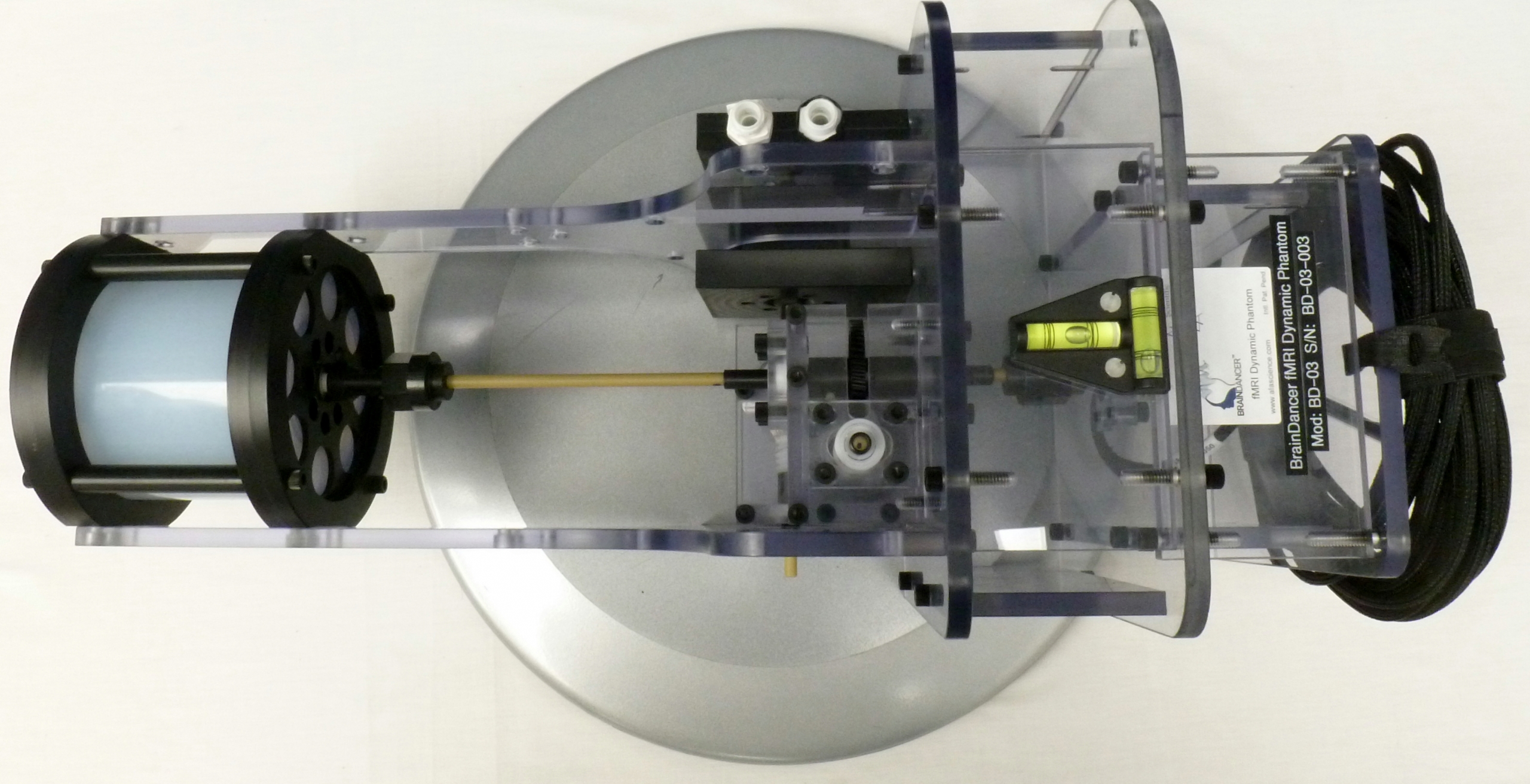
The first article introduces a dynamic phantom developed by our team, BrainDancer™ (Patent 11,061,093), which amplifies signal-to-noise ratio to enable single-subject-level fMRI.
Related Publications
Awards
NSF GRF 1000116964
Development of Dynamic Phantom for fMRI Calibration of Time-Series
NIH NIDA SBIR R44 DA043277
fMRI Dynamic Phantom for Improved Detection of Resting-State Networks
NSF STTR 1622525
fMRI Dynamic Phantom for Improved Detection of Resting-State Networks
NHLBI 5U01HL12752202 REACH
fMRI Dynamic Phantom for Improved Detection of Resting-State Networks
ONR DURIP N000140710871
Using Optical Topography to Optimize Functional MRI for Neurobiology-Based Complex Systems Analysis


Stony Brook, NY 11794-5252